
Acne scarring is one of the most common reasons people book a skin consultation — and one of the areas where expectations and reality most often drift apart. Microneedling is a genuinely useful treatment for many types of acne scars. It is also slow, it works better on some scars than others, and it improves scarring rather than erasing it.
Here is an honest walk-through of how microneedling works on scars, which scars respond best, how many sessions you are likely to need, and what you can do to get the most out of a course.
How microneedling works on scar tissue
A microneedling pen creates thousands of tiny, controlled channels in the skin. The skin treats these as minor injuries and responds by producing new collagen and elastin. Over weeks and months, that new collagen gradually lifts the base of depressed scars and makes the surface smoother. You can read more about the device and the different treatment options on our microneedling page.
The key word is gradually. Collagen remodelling takes around three months to show its full effect after each session, which is why a course is spaced out and why the final result is judged months after the last appointment, not the week after.
Which acne scars respond best
Acne scars are not all the same, and the type matters more than anything else in predicting your result.
- Rolling scars — soft, wave-like depressions with sloping edges. These usually respond well to microneedling.
- Shallow boxcar scars — broader depressions with defined edges. Shallow ones often improve noticeably; deep ones less so.
- Ice-pick scars — narrow, deep pits. Microneedling alone does little for these; they generally need other, targeted techniques.
- Red or brown marks left after spots — not true scars, but discolouration. These often fade with time, sun protection and treatments such as peels.
Most people have a mix. A good assessment identifies which scars are which and sets expectations for each, rather than promising a uniform result.
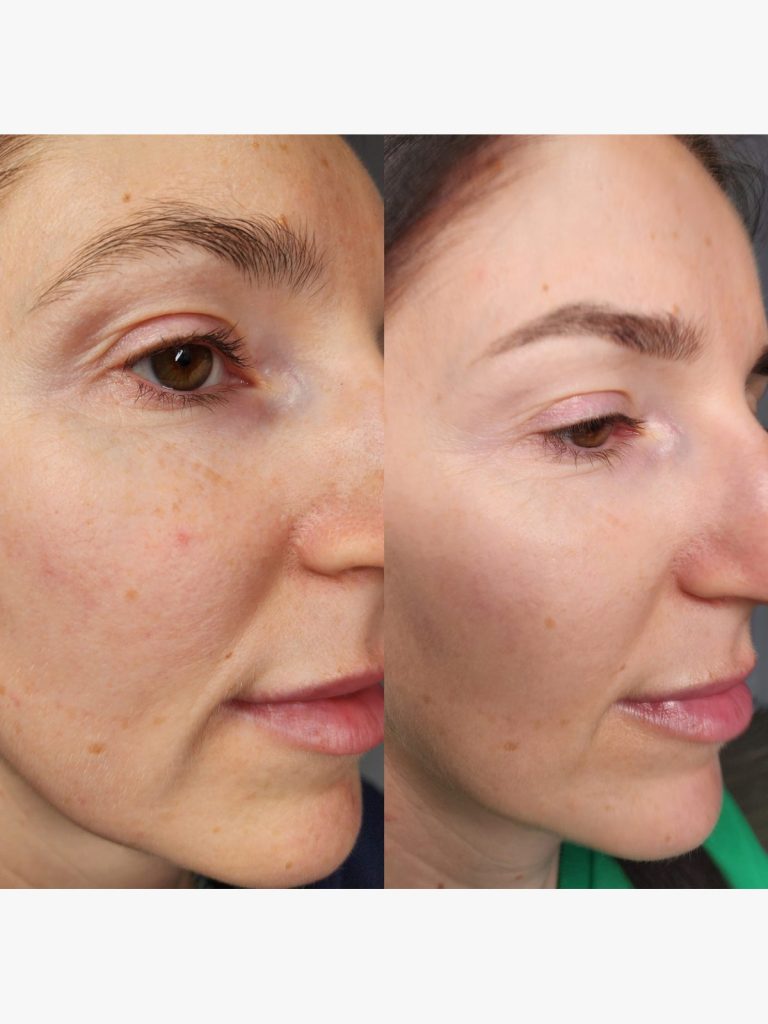
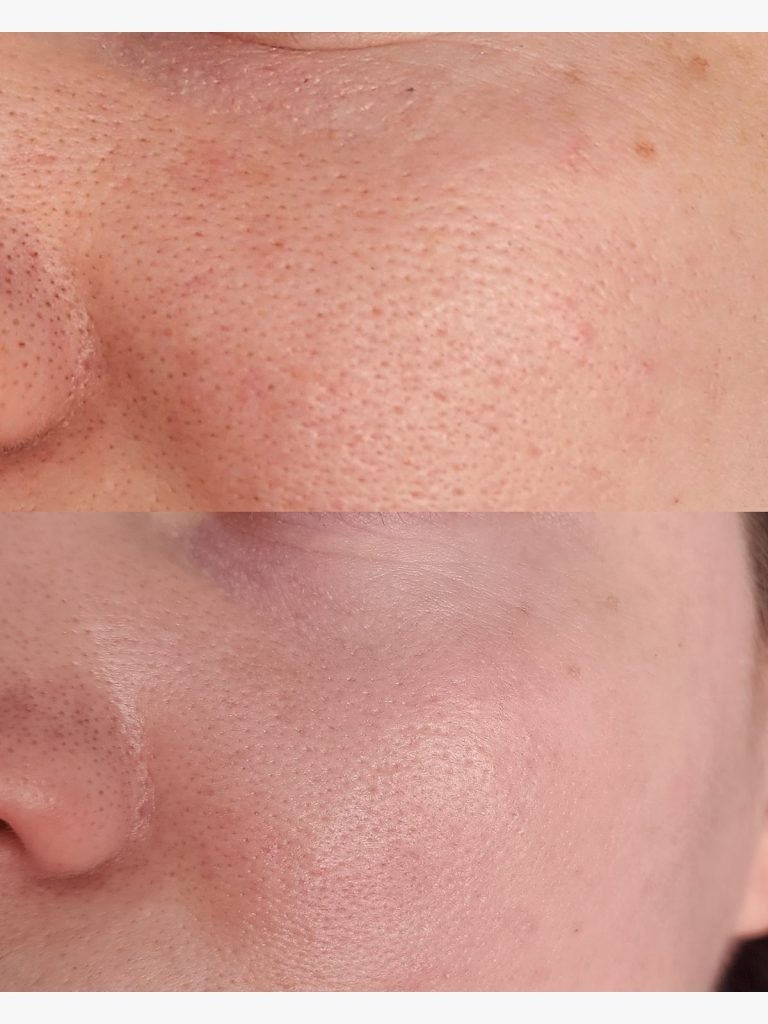
Photos of Beauty Maison Aesthetics clients, shared with consent. Individual results vary.
What happens in a session
Your skin is cleansed and a topical numbing cream is applied for around 20 to 30 minutes. The pen is then passed over the treatment area with a glide serum, with the needle depth adjusted for the thickness of the skin and the type of scarring. The treatment itself usually takes 20 to 30 minutes for a full face. Most people describe it as a scratchy, vibrating sensation rather than pain.
Afterwards the skin looks pink to red, like a moderate sunburn. That is expected and usually settles within 24 to 48 hours. Some light flaking can follow a few days later as the surface renews.
Session by session: what to expect
Session one. The skin often looks brighter and feels smoother within a week or two, mostly from surface renewal. The scars themselves will not look very different yet — the collagen response is only beginning.
Sessions two and three. Usually spaced four to six weeks apart. This is where many people start to notice that rolling scars catch the light less and makeup sits more evenly.
Sessions four to six. For moderate scarring, a course of three to six sessions is typical. Improvement continues for around three months after the final session as collagen matures.
Expect improvement measured in degrees, not a clean slate. A realistic goal is scars that are softer, shallower and less noticeable in everyday light.
Can PRP make microneedling more effective?
Many clients combine microneedling with platelet-rich plasma (PRP), prepared from a small sample of your own blood and applied during or after needling. The idea is that growth factors in the plasma support the healing response. Evidence suggests PRP can add a modest benefit for acne scarring; it is a reasonable option to discuss, not a requirement. Microneedling can also be paired with mesotherapy for hydration.
Who should wait before microneedling
- Anyone with active, inflamed acne in the area — the breakouts need to be controlled first
- People who have recently taken isotretinoin — you will usually be advised to wait, often around six months
- Anyone with an active skin infection, cold sore outbreak or open wounds in the area
- People prone to keloid scarring, until this has been discussed in detail
If acne is still active, the first step is getting it under control. Our skin care and acne treatments page explains how a routine and in-clinic treatment fit together, and when a physician or dermatologist is the right place to start.
Skin tone and pigmentation
One of microneedling’s real advantages is that it is suitable for all skin tones. Because it does not rely on heat, the risk of post-inflammatory darkening is lower than with many laser treatments. Sun protection before and after is still essential, especially for deeper skin tones and anyone prone to pigmentation.
Getting the most from your course
- Use a broad-spectrum SPF 30 or higher every day, all year
- Avoid retinoids, exfoliating acids and scrubs for a few days before and after each session
- Skip makeup for 72 hours and avoid swimming, saunas and heavy exercise for the first day
- Keep your sessions on schedule — the collagen response builds across the course
- Judge the result three months after your final session, not the week after
Frequently Asked Questions
Ready to talk it through? Book a free, no-obligation consultation, or read more about microneedling.