
As the patio season ends and the days get shorter, many people look in the mirror and notice what summer left behind: new freckles and dark spots, uneven tone, rough texture and a general dullness. Autumn is also, conveniently, the best time of year to do something about it with a course of medical-grade chemical peels.
Here is why the timing matters, which peel suits which concern, and how to plan a course that takes you from October through to spring.
Why the season matters
Chemical peels work by removing the outer layers of the skin in a controlled way, so that fresher, more even skin replaces them. For a while afterwards, that new skin is more sensitive to ultraviolet light. Strong sun on freshly peeled skin raises the risk of irritation and, more importantly, of new pigmentation — the very thing many people are trying to treat.
In Ontario, UV levels drop considerably from October onwards, and most of us spend far more time indoors. That makes it much easier to protect the skin between sessions and lets the peels do their job without summer working against them. It is also simply a practical time: there are fewer beach holidays and outdoor events to plan around.
That said, sunscreen is still essential in winter. UV is lower, but it does not disappear — and snow can reflect a surprising amount of it.
Which peel for which concern
Medical-grade peels are not all the same. The acid, its strength and how long it stays on the skin all change the result. Our chemical peels page covers each option in detail; here is the short version.
- Glycolic acid peels — a small molecule that penetrates well. A good choice for sun damage, uneven tone, fine lines and dullness.
- Mandelic acid peels — a larger molecule that works more gently. Often preferred for sensitive skin, acne-prone skin and deeper skin tones.
- Lactic acid peels — mild and hydrating. Ideal as a first peel or for dry, dehydrated skin.
- VIP / Red Carpet peel — designed for a visible glow with minimal downtime before an event.
- Eye lightening peel — a gentle peel formulated for the delicate skin around the eyes.

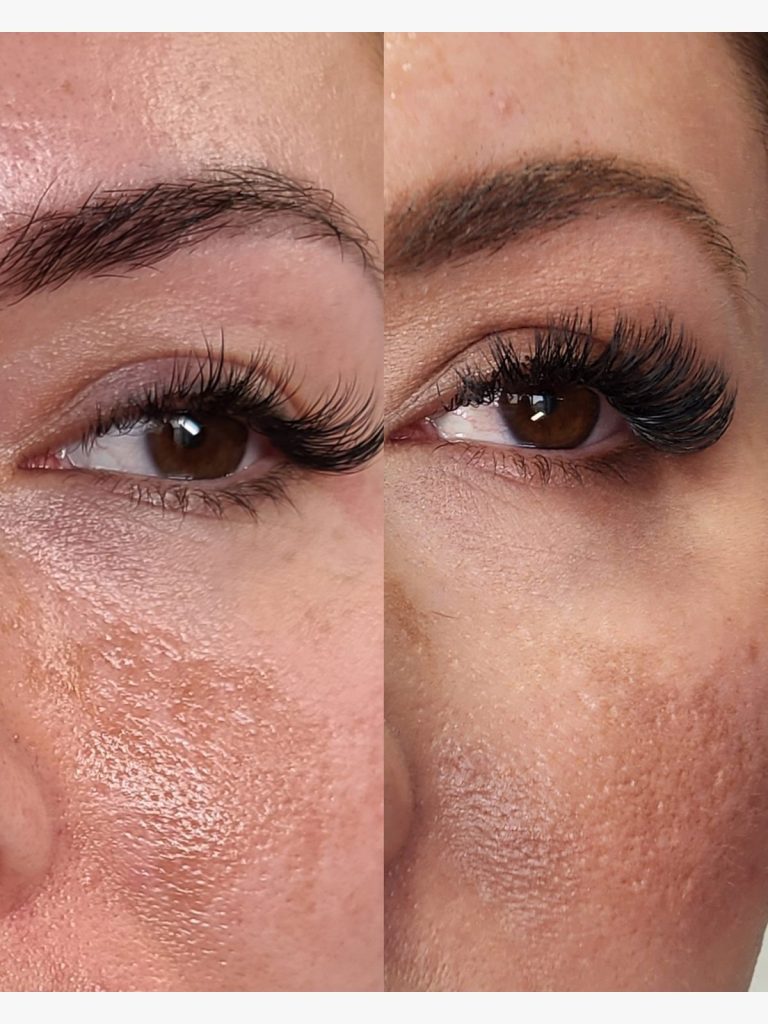
Photos of Beauty Maison Aesthetics clients, shared with consent. Individual results vary.
Planning a course from October to spring
Most concerns respond best to a series of peels rather than a single one. A typical plan looks like this:
- October: consultation, skin assessment and a gentle first peel to see how your skin responds
- November to February: a series of peels, usually every two to four weeks, adjusted as your skin tolerates more
- March: review the result and switch to maintenance before UV starts rising again
- Throughout: a consistent home routine and daily SPF, so results hold
The exact number of peels depends on the concern. Brightening and texture often improve within three or four sessions; stubborn pigmentation usually needs more patience.
A word about melasma
Melasma — patchy brown pigmentation, often on the cheeks, forehead and upper lip — is driven by hormones and light as well as sun, and it can be made worse by aggressive treatment. Peels can help, but they need to be chosen and paced carefully, and they work best alongside strict sun protection and the right home care. If you think you have melasma, mention it at your consultation so the plan accounts for it.
What a peel feels like, and the downtime
Most people feel warmth, tingling or a brief stinging while the peel is on, which settles once it is neutralised or removed. Afterwards the skin may look slightly pink and feel tight. Depending on the peel, light flaking usually starts on day two or three and lasts a few days. Deeper peels mean more visible peeling; lighter peels may cause none at all.
The most important rule: do not pick or pull at flaking skin. Let it shed on its own. Our post-peel care guide covers the do’s and don’ts in detail.
How to prepare
- Pause retinoids, exfoliating acids and scrubs for several days beforehand, as advised at your consultation
- Avoid waxing, laser hair removal or threading on the area in the week before
- Tell us about any history of cold sores, as some peels can trigger an outbreak
- Arrive with clean skin, or allow time to remove makeup
Your home routine matters as much as the peel
A peel is one appointment every few weeks. Your routine is every other day. Gentle cleansing, hydration, targeted ingredients for pigmentation and a daily SPF make a measurable difference to how long results last. We use and recommend ZO Skin Health where it suits the skin, and our skin care page explains how a routine is built around what you will realistically keep doing.
For texture or acne scarring, peels can also be alternated with microneedling over the winter months, giving two different routes to smoother skin.
Peel, microneedling or both?
Peels and microneedling are often compared, but they work on different parts of the problem. A peel works from the surface down: it is best at evening out tone, fading sun spots, softening fine lines and giving that brighter, smoother finish. Microneedling works from within: it triggers collagen, so it is better for texture, enlarged-looking pores and shallow acne scarring.
If your main concern is colour — brown spots, redness, a dull or uneven complexion — a peel series is usually the better starting point. If it is texture or scarring, microneedling tends to do more. Many people have a bit of both, and alternating the two over the colder months is a common and effective plan. At your consultation, the order and spacing are worked out so the skin always has time to recover between treatments.
Frequently Asked Questions
Ready to talk it through? Book a free, no-obligation consultation, or read more about medical-grade chemical peels.