

Hands-on aesthetic injector training for nurses and physicians, taught by Sonya Feskiv, RPN, at Beauty Maison Aesthetics in Maple, Vaughan. Sonya has practised nursing since 2009, with a hospital background in acute medicine and dialysis, and holds CBAM certifications in injectables, plasma therapy, chemical peels and vascular complications. She holds the CAMP® designation (Certified Aesthetic Medicine Practitioner) from the Canadian Board of Aesthetic Medicine and a Medical Aesthetic Trainer Certificate from Ordona Medical Consulting.
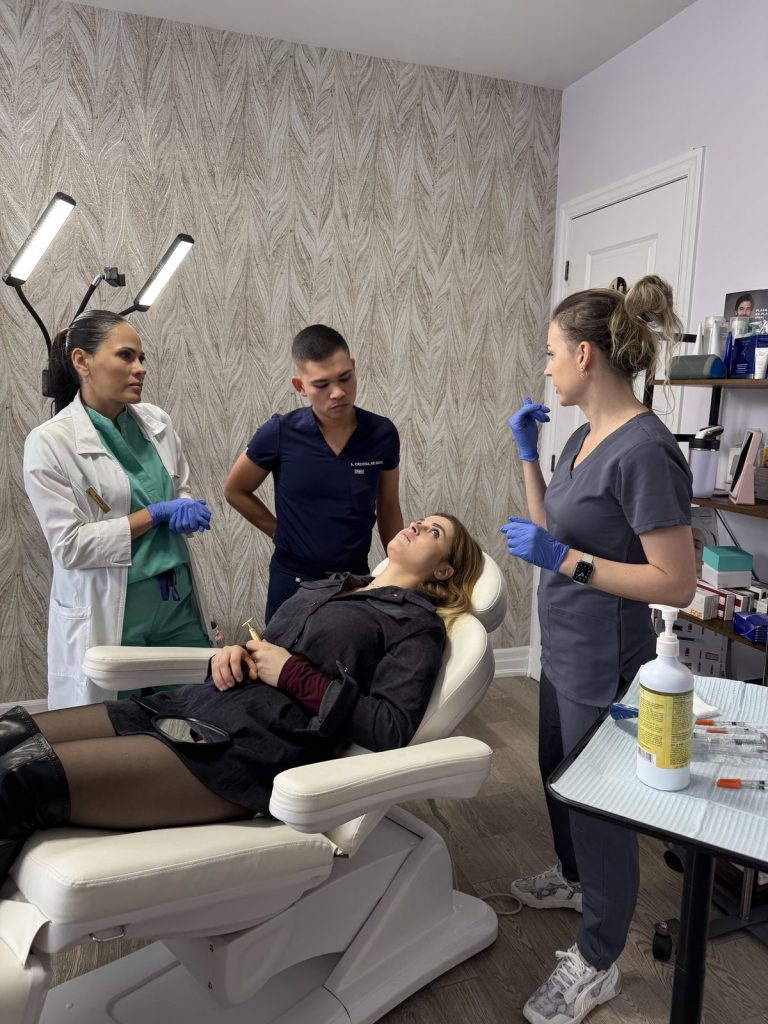
Three courses are offered: a basic course for those new to injectables, an advanced course for practising injectors, and a dedicated complications management course. All are taught in small groups in a working clinic, with supervised practice on live models rather than theory alone.
Fees and upcoming dates are available on request.
Trainer Credentials
The training behind what is taught here: injectables, facial anatomy and complication management. Click a certificate to enlarge it; the full list is on the About page.

Canadian Board of Aesthetic Medicine · May 2022
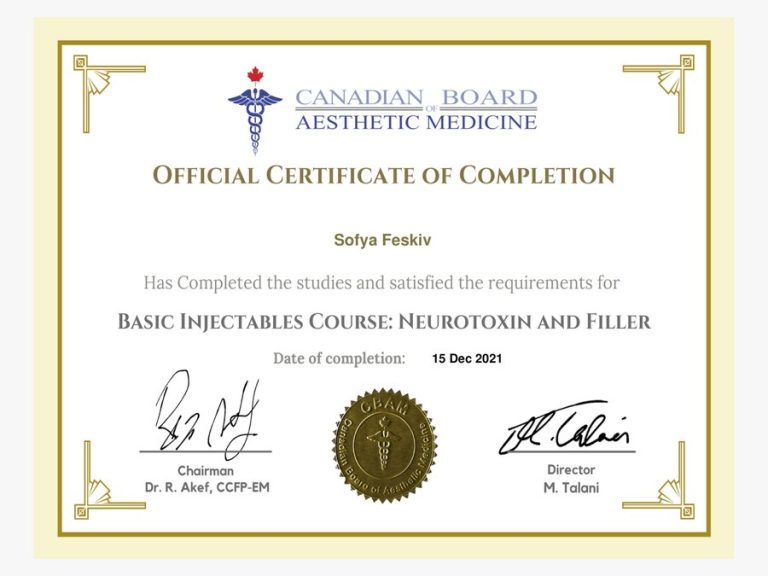
Canadian Board of Aesthetic Medicine · Dec 2021
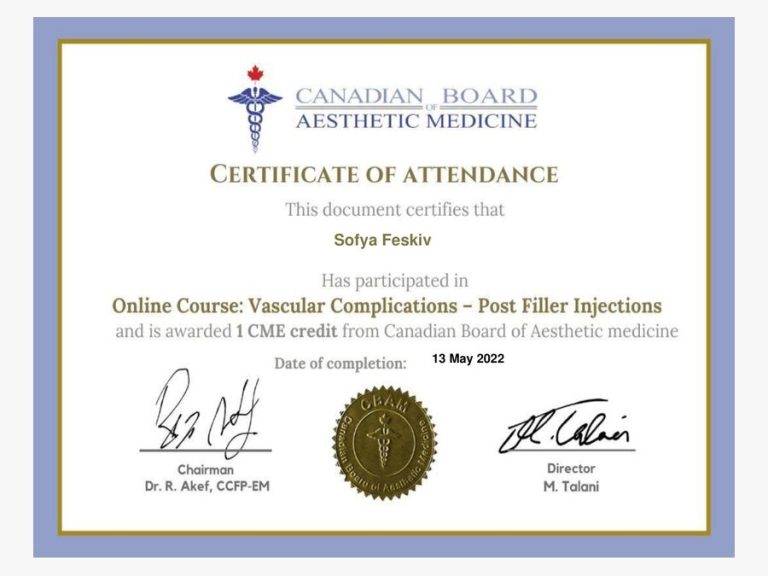
Canadian Board of Aesthetic Medicine · May 2022

Canadian Board of Aesthetic Medicine · Mar 2024

Canadian Aesthetics Expo · Sept 2025
Basic Injector Course
Botulinum toxin and dermal filler foundations
The starting point for nurses and physicians who are new to aesthetic injectables. The course is built around the things that make injecting safe before it is ever cosmetic: facial anatomy, patient selection, consent and documentation.
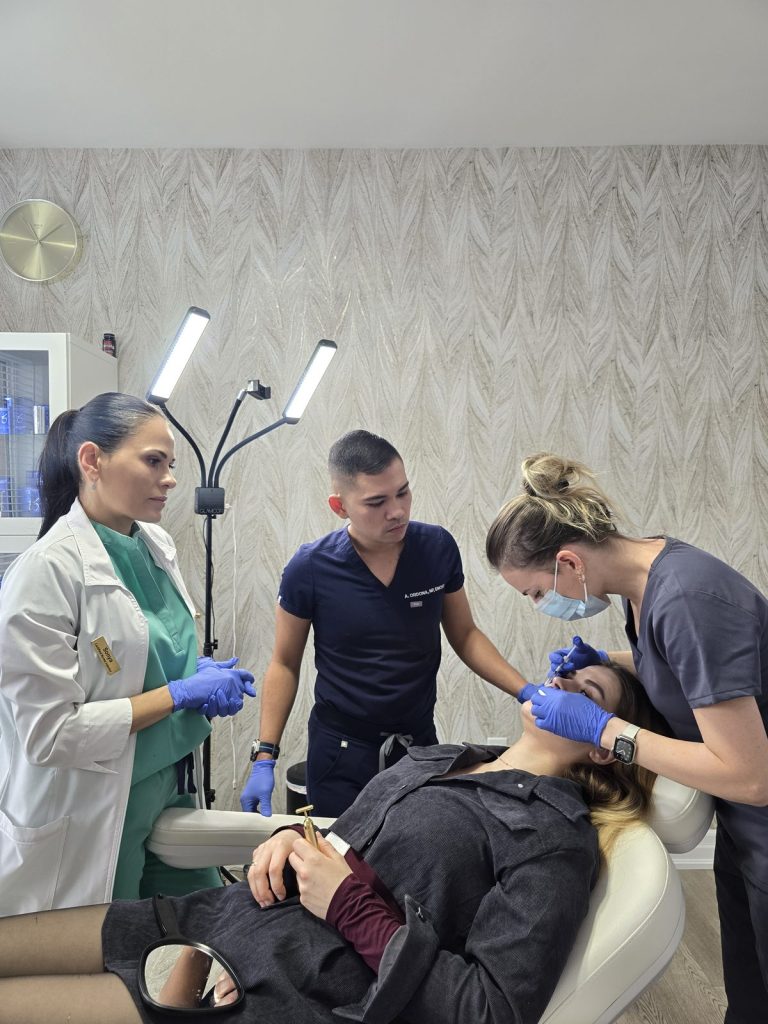
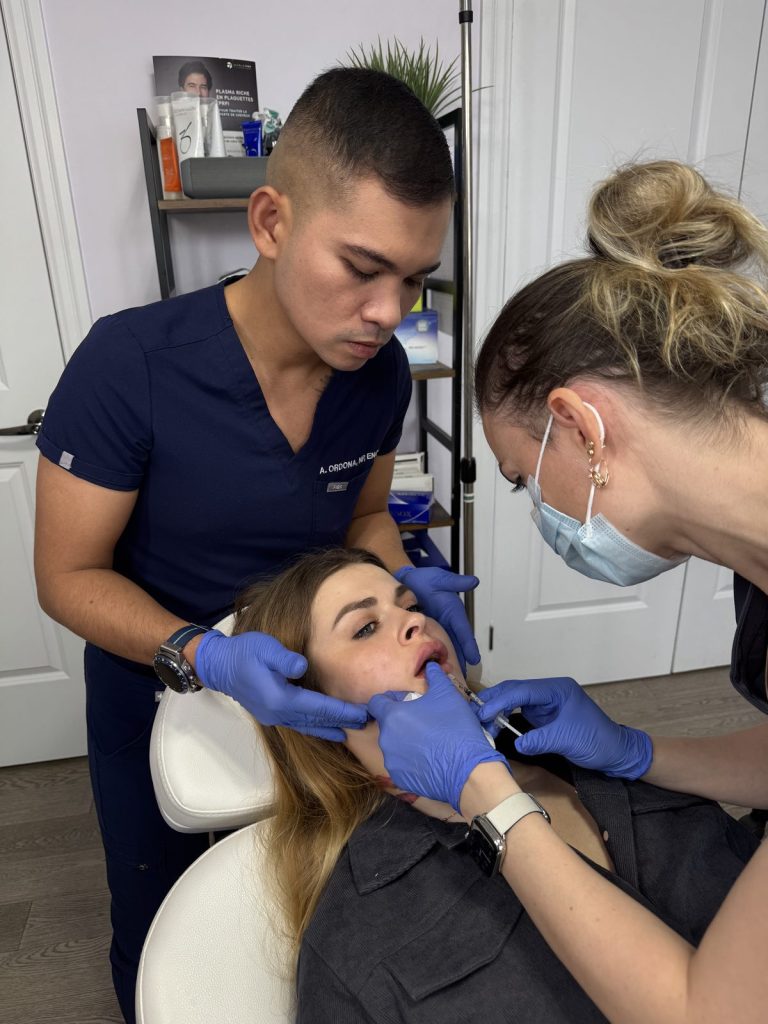
From there it moves to the core treatment areas most clients ask for first, and to hands-on practice on live models under direct supervision — not just on practice pads. You leave knowing how to assess a face, plan a conservative treatment and explain honestly what it will and will not do.
Format: theory materials and 4 online classes, then 2 full days of hands-on training with 6–8 live models per student. Neuromodulators: upper face, nose and lip flip. Fillers: cheeks, lips, chin, gonial angle and nasolabial folds.
- For RNs, RPNs, NPs and physicians new to injectables
- Facial anatomy, danger zones and patient assessment
- Consent, charting and aftercare
- Supervised hands-on practice on live models
Advanced Injector Course
For injectors already treating patients
For practitioners who are comfortable with the basics and want to treat more of the face with confidence. The focus shifts from single areas to the whole face: reading proportions, planning combination treatment, and knowing when to say no.
Advanced areas carry more anatomical risk, so technique is taught alongside the reasoning behind it — product choice, depth, volume and the order in which areas are treated — with supervised practice on live models.
Neuromodulators: lower face, hyperhidrosis, DAO, platysma, nose, eyelids and LLSAN. Biostimulator: Radiesse® for the full face, neck, hands and body. Fillers: advanced and cannula techniques — under-eyes with cheeks, chin, marionette lines, pyriform fossa, nasolabial folds, lips and neck.
- Whole-face assessment and treatment planning
- Higher-risk areas taught with anatomy first
- Product selection, depth and volume decisions
- Supervised hands-on work on live models
Complications Management Course
Recognising and managing adverse events
Every injector will eventually see a complication. What matters is recognising it early and knowing exactly what to do next. This course is dedicated to that, and is suitable for injectors at any level — including those trained elsewhere.
It covers the adverse events that matter most in aesthetic practice, with particular weight on vascular compromise after filler: early signs, the hyaluronidase protocol, when and how to escalate, and how to document and follow up. Sonya holds a CBAM certificate in vascular complications after filler injection.
Format: one full day, in person, with written materials and complication protocols to take back to your own practice.
- Vascular occlusion: recognition and hyaluronidase protocol
- Toxin complications such as eyelid or brow ptosis
- Infection, nodules and delayed reactions
- Escalation, documentation and patient follow-up
Before You Enrol: Scope of Practice
What a course can and cannot give you
A training certificate shows you have been taught a skill. It does not, on its own, authorise you to perform it. Botulinum toxin and many fillers are prescription products, and in Ontario nurses administer them under an order or medical directive from an authorised prescriber.
Your own regulatory college sets the rules for your profession — the College of Nurses of Ontario for RNs, RPNs and NPs, and the College of Physicians and Surgeons of Ontario for physicians. Check its current guidance before you begin practising, and make sure your liability insurance covers aesthetic procedures.
These points are raised at the start of every course, because they are what keeps you and your patients safe after it ends.
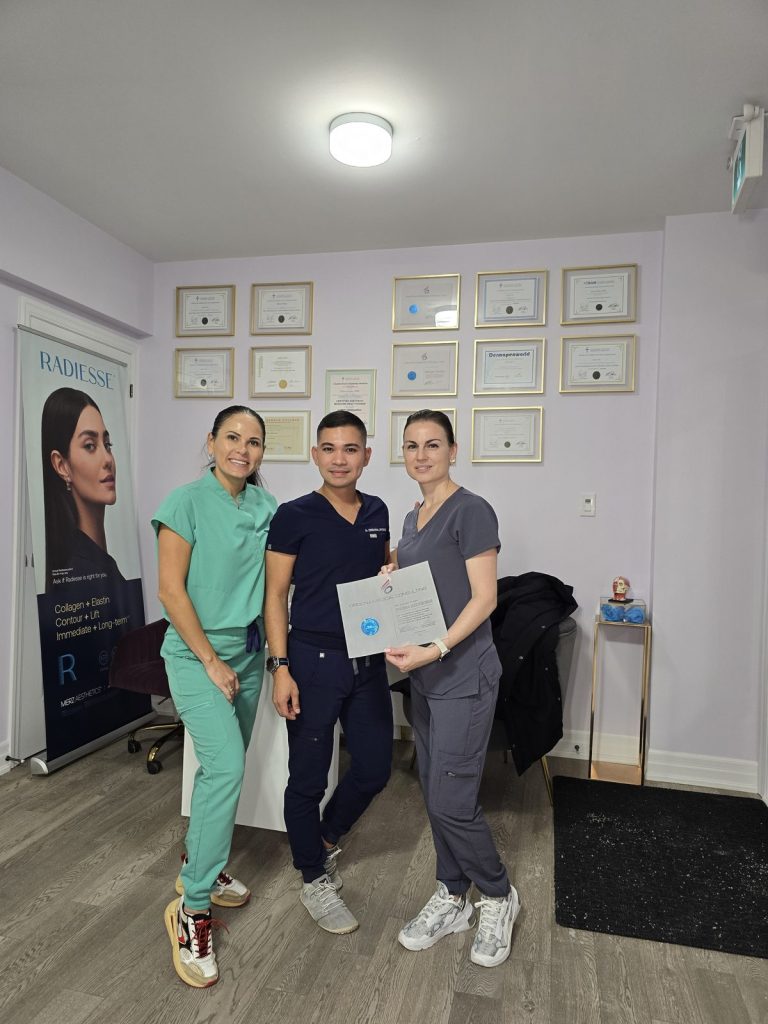
- Certificate of course completion
- Nurses inject under an order or medical directive
- Confirm current guidance with CNO or CPSO
- Check your liability insurance covers aesthetics
Why train at Beauty Maison
Taught by a practising injector
Sonya treats patients in this clinic every week, so the course reflects real practice rather than a script.
Live models, small groups
Every student gets supervised hands-on time, which is where technique and judgement are actually learned.
Safety before aesthetics
Anatomy, consent and complication management run through every course, not just the dedicated one.
Honest about scope
You will be told plainly what your licence allows and what it does not, so you start practising on the right footing.
Training FAQ
Ask about upcoming course dates
Tell us your profession and which course interests you, and you will receive dates, fees and the full outline. Or call 647-992-2921.
Course content is educational. Completing a course does not grant authority to perform any procedure; scope of practice is set by your regulatory college, and prescription products require an order or medical directive from an authorised prescriber.