
When people think of dermal filler, they usually picture hyaluronic acid — the clear gel used in lips and cheeks. But it is not the only option. Radiesse®, a calcium hydroxylapatite filler, works in a different way and has become a go-to choice for areas like the hands, the neck and the jawline.
This article explains how the two compare, where each one shines, and the one difference you should understand before choosing.
How hyaluronic acid filler works
Hyaluronic acid (HA) is a sugar molecule that occurs naturally in the skin and holds water. HA fillers are cross-linked versions of it, made into gels of different firmness for different jobs — softer for lips, firmer for cheeks and chin. They add volume immediately and are gradually broken down by the body over months. Our dermal fillers page walks through the areas they are used in.
Their big safety advantage is reversibility. If a result is not right, or in the rare event of a complication, HA filler can be dissolved with an enzyme called hyaluronidase.
How Radiesse works
Radiesse is made of tiny calcium hydroxylapatite microspheres suspended in a gel. It works in two stages. The gel gives immediate volume; then, as the gel is absorbed, the microspheres stay in place and stimulate your own collagen production over the following months. That is why it is often described as a biostimulator as well as a filler.
It is firmer than most HA fillers, and its effect lasts longer: the product itself is eliminated within about a year, but the collagen and elastin it stimulates last up to two years. It can also be diluted and spread in a thin layer to improve skin quality rather than add volume.
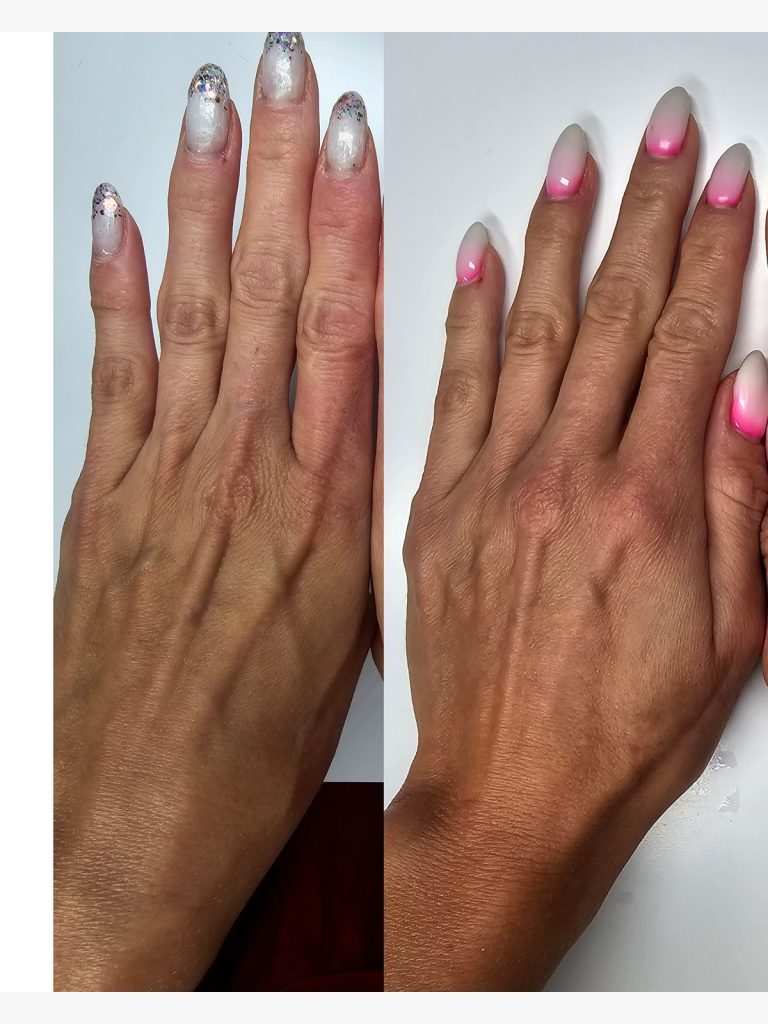
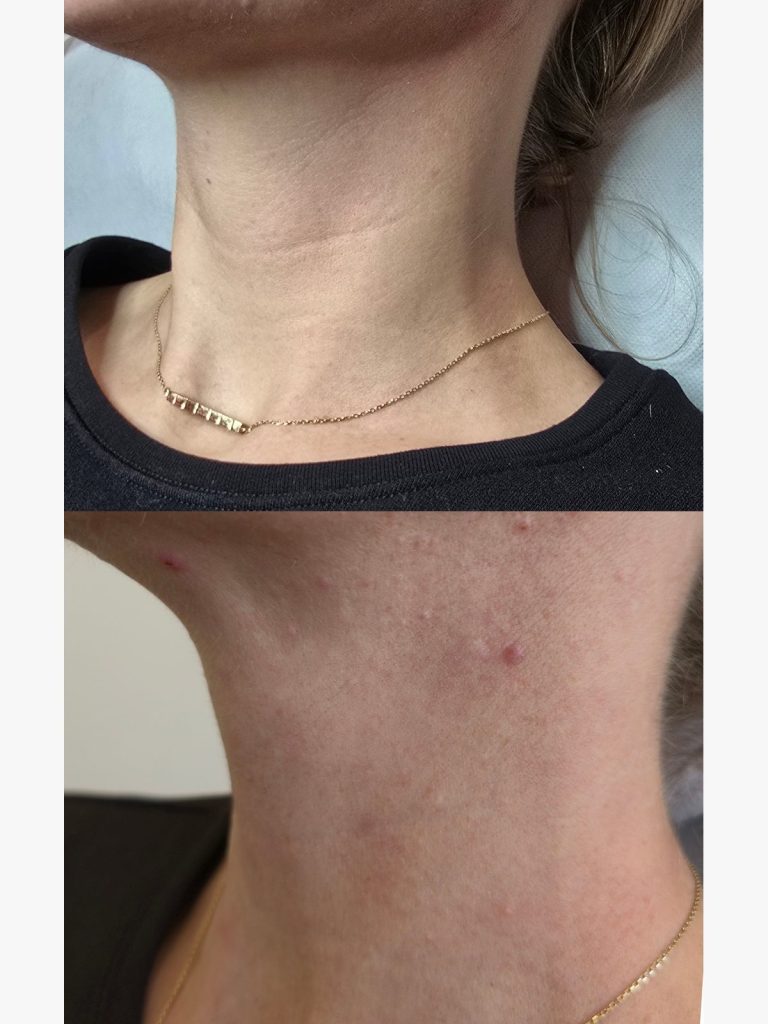
Photos of Beauty Maison Aesthetics clients, shared with consent. Individual results vary.
The difference that matters most: reversibility
Radiesse cannot be dissolved with hyaluronidase. Once it is placed, it stays until the body breaks it down. This is not a flaw — it is simply a different trade-off — but it shapes where Radiesse is and is not used. It is not used in the lips, and it calls for a conservative, experienced approach everywhere else. If being able to reverse your result matters to you, HA filler is the safer choice.
Area by area
Hands. With age, the skin on the back of the hands thins and veins, tendons and knuckles become more visible. Radiesse for hands restores a smooth layer of volume and builds collagen in thin skin. It is one of the areas where Radiesse is particularly well suited. HA filler can also be used in the hands, but many injectors prefer Radiesse here for its longevity and collagen effect.
Neck. For crepey skin and horizontal “necklace” lines, diluted Radiesse is used as a biostimulator: spread thinly under the skin, it does not add visible bulk but improves texture and firmness gradually, with the best results at two to four months. Standard HA filler is not designed for this job, although skin boosters are another option for neck texture.
Jawline and chin. Both work well. Radiesse’s firmness gives crisp definition and lasts longer; a firm HA filler offers similar structure with the option to adjust or reverse. See our jawline and chin filler sections for more.
Lips and under the eyes. These are HA territory. Lip filler and tear trough filler need soft, adjustable, reversible products. Radiesse is not used in either area.
Side by side
- Made of: HA — cross-linked hyaluronic acid gel. Radiesse — calcium hydroxylapatite microspheres in a gel carrier.
- How it works: HA — adds volume. Radiesse — adds volume, then stimulates your own collagen.
- Typical longevity: HA — about 6–18 months by area. Radiesse — the product is gone within about a year; the collagen it stimulates lasts up to 2 years.
- Reversible: HA — yes, with hyaluronidase. Radiesse — no.
- Best areas: HA — lips, under-eyes, cheeks, chin, jawline. Radiesse — hands, neck (diluted), jawline, chin, cheeks.
- Not used in: Radiesse — lips and under-eyes.
What to expect at your appointment
Both treatments start with an assessment of the area and a conversation about what you want to change. Radiesse and most HA fillers contain lidocaine, a local anaesthetic, to make the treatment more comfortable. Swelling and some bruising are common for a few days. With hands, the swelling can be noticeable for a short time, so avoid booking right before an event where your hands will be on show.
Serious complications are uncommon with either product but can happen, which is why treatment should only be carried out by a regulated health professional trained in facial anatomy and complication management.
Cost and value
Radiesse and HA fillers are priced per syringe, and the number you need depends on the area and the result you want. Because Radiesse often lasts longer and builds collagen, some people find it good value over time for hands or jawline. Current prices are on our price list, and your actual plan is worked out at a free consultation.
Questions to ask at your consultation
- Which product do you recommend for my area, and why that one rather than the alternative?
- Is this a licensed use of the product, or off-label?
- How many syringes do you expect I will need, and how long should the result last?
- What happens if I do not like the result, and can it be reversed?
- What are the signs of a complication, and how do I reach you if I notice one?
- Do you keep hyaluronidase and an emergency protocol on site?
A good injector will answer all of these without hesitation. If the answers are vague, or if you feel pushed towards a particular product or number of syringes, it is worth taking your time. At Beauty Maison, consultations are complimentary and carry no obligation — including when the honest answer is that you do not need treatment yet.
Frequently Asked Questions
Ready to talk it through? Book a free, no-obligation consultation, or read more about dermal fillers and Radiesse.